Light Instead of a Drill: What Waterlase Changes
Laser energy and water can do some of what a drill does, with less heat and less vibration. Where it fits, and where it doesn’t.

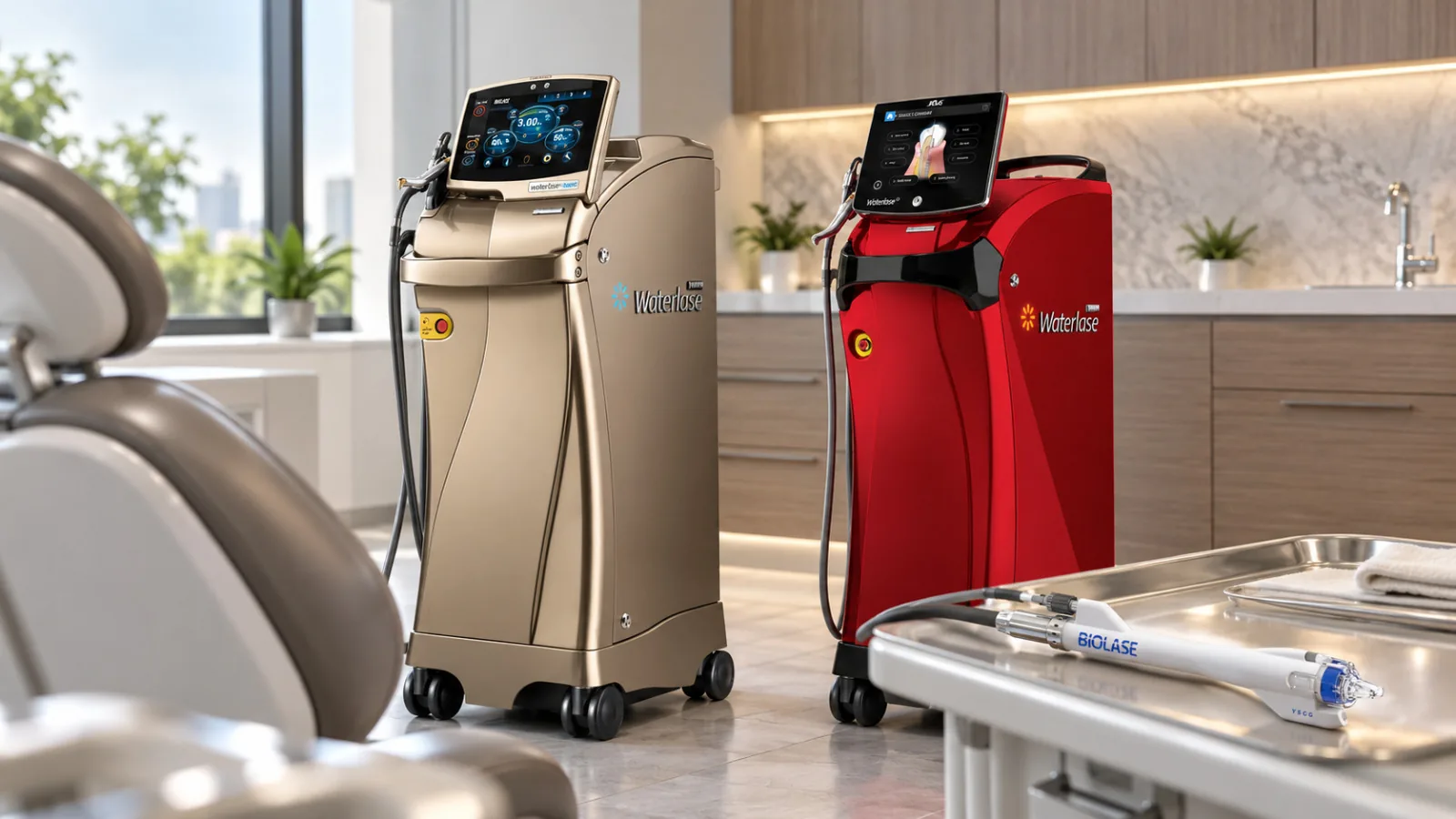
BIOLASE WaterLase: laser energy, with water.Fig. 01
The sound people remember
Ask people what they dislike about dental work and many mention the drill itself: the sound, the vibration, the heat. A laser works differently.
01 · The instrumentLaser energy, with water
The BIOLASE WaterLase uses laser energy together with a fine spray of water to work on gum tissue and bone with precision. The energy is absorbed by the water in the tissue and in the spray, which removes tissue a very small amount at a time while the water keeps the area cool.
Nothing spins and nothing presses, so there is no vibration of the kind a drill makes, and less heat. For some procedures, that can also mean less need for numbing.
02 · Where it fitsTeeth, gums, bone and implants
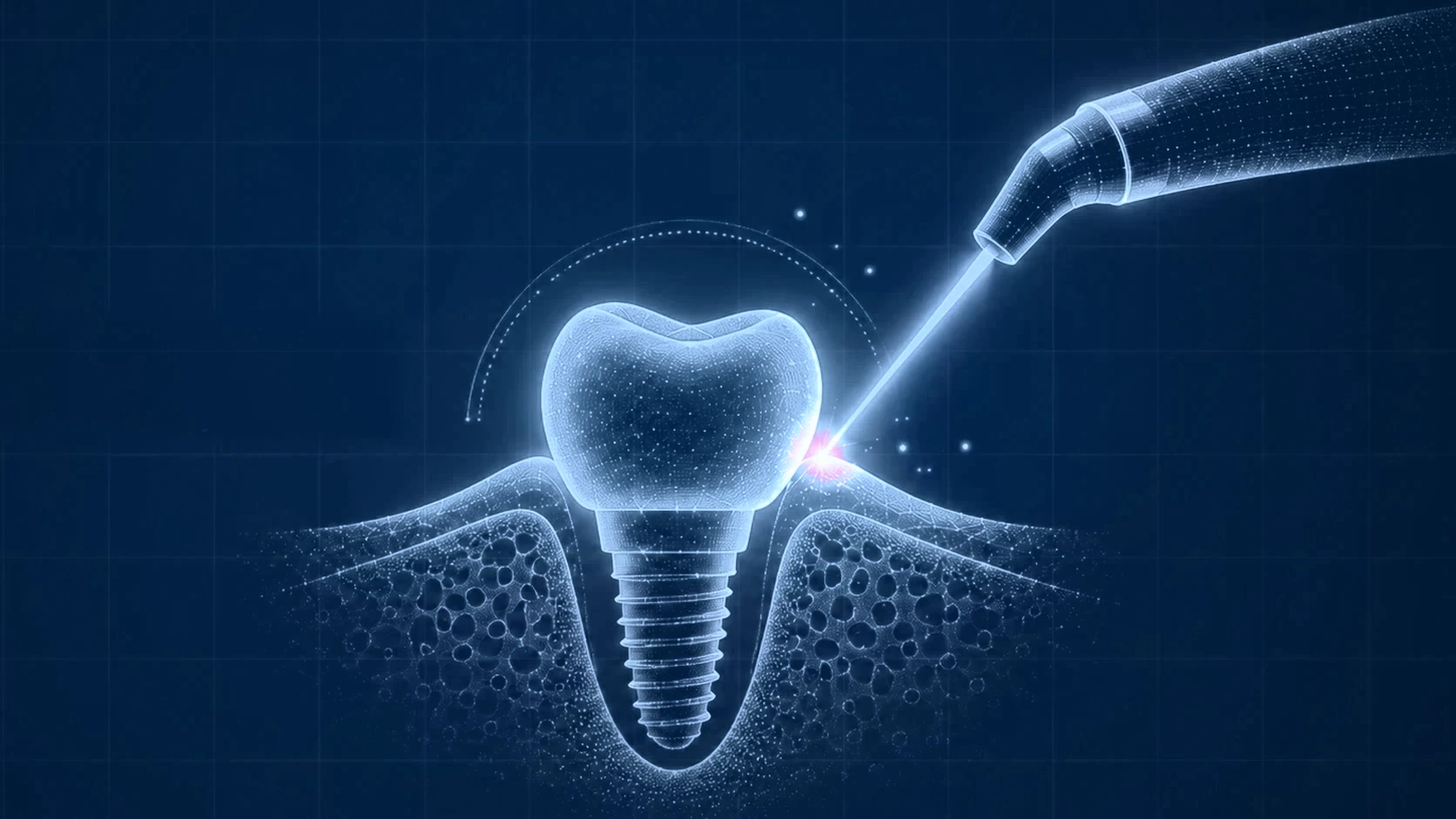
At The Smile Galleries the laser treats gum disease and infection around implants, cleans the canals in every root canal, and prepares teeth for fillings, wherever precise work on teeth, gums and bone matters. It isn’t a replacement for every instrument in the room, and it isn’t meant to be.
- Some restorations need conventional tools
- Not every patient or tooth suits a laser
- The choice follows the exam, not the other way round
- Gum tissue, shaped and treated
- Bone, worked on with precision
- Care around implants
03 · The principleThe right tool, after the reading
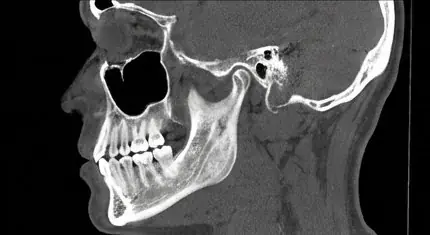
Like every instrument in the practice, the laser comes after measuring, not before. The bone is read on a cone beam scan, the bite on a T-Scan, and only then is it decided which tool does the work.
“The laser comes after measuring, not before.”
04 · The seriesAbout this series
An ongoing series translating what the practice’s instruments actually reveal, one scan, one measurement, one plain-language explanation at a time.
- T-Scan: bite timingRead
- CBCT: bone in 3DRead
- JVA: joint soundSoon
- EMG: muscle effortSoon
- CEREC: fitSoon
- Waterlase: tissueYou’re reading
- Implants: bone firstRead
Words in this reading
Laser dentistry
Dental treatment that uses focused light energy in place of, or alongside, conventional instruments.
Soft tissue
The gums and the other tissue in the mouth that isn’t tooth or bone.
Hard tissue
Bone and teeth.
Peri-implant tissue
The gum and bone immediately around an implant.
Curious whether laser treatment fits your case?
Book a visit at The Smile Galleries in Melbourne, Florida to find out.
Dr. Sangiv I. Patel
Dr. Patel founded The Smile Galleries in Melbourne, Florida in 1995. Thirty years of Physiologic Dentistry: bite, joint, muscle and bone measured as one system before any treatment plan is written.
More about Dr. PatelNew readings, by email
Get the next reading when it’s published.
One plain-language article at a time, by email. No promotions, no schedule to keep up with.