- Services
- TMJ Disorder Treatment
TMJ Disorder Treatment
Headaches, a clicking jaw, worn teeth. An orthopedic problem with a neurological component, and the pain is rarely where the problem is. In Melbourne, Florida, the bite, the joint and the muscles are measured before anything is treated.
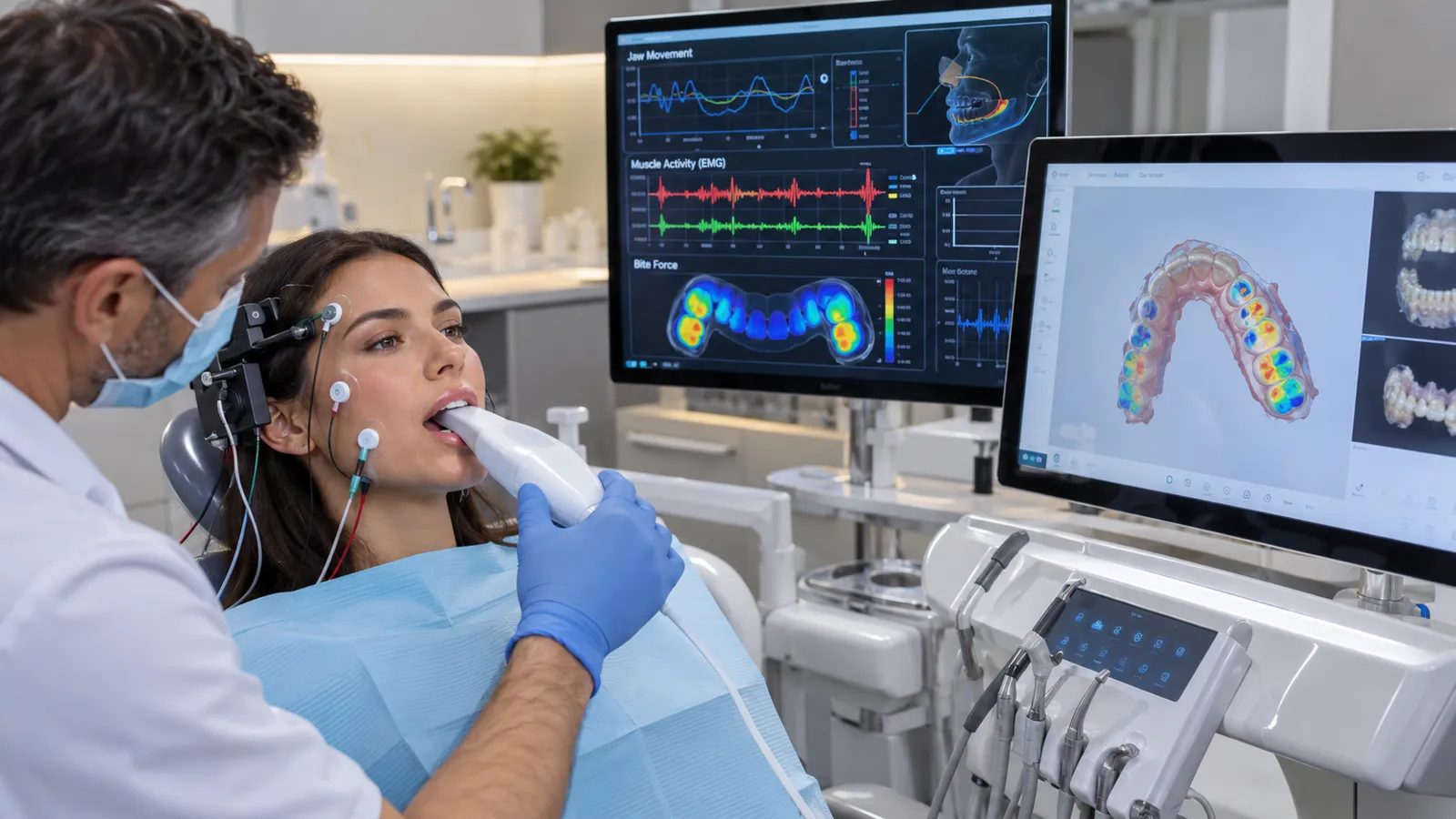
How TMJ is treated here
Headaches. Clicking. One system.
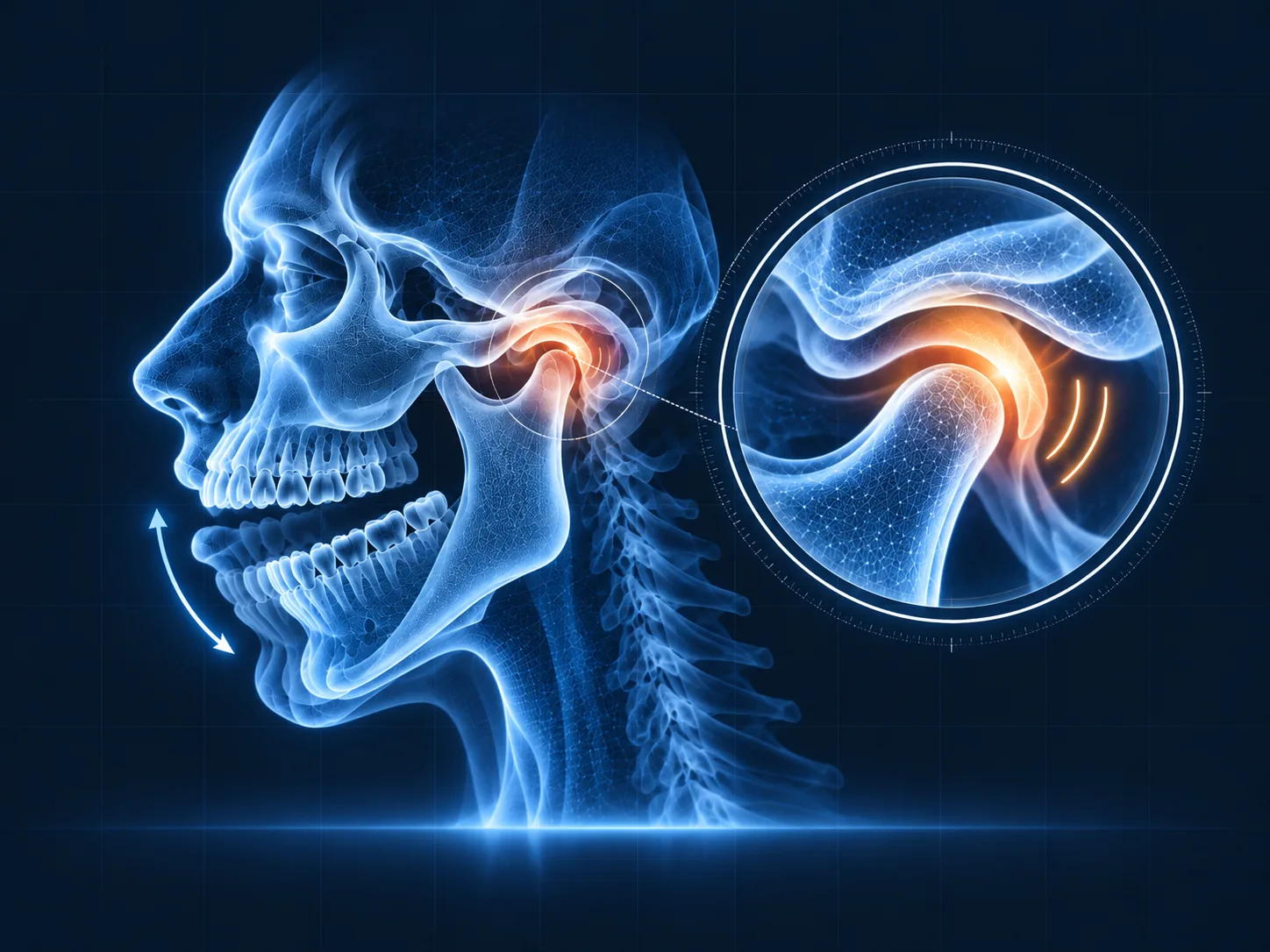
Clicking, popping or locking
Friction inside the joint as it opens and closes. Healthy joints have none, and it can be measured, not just heard.
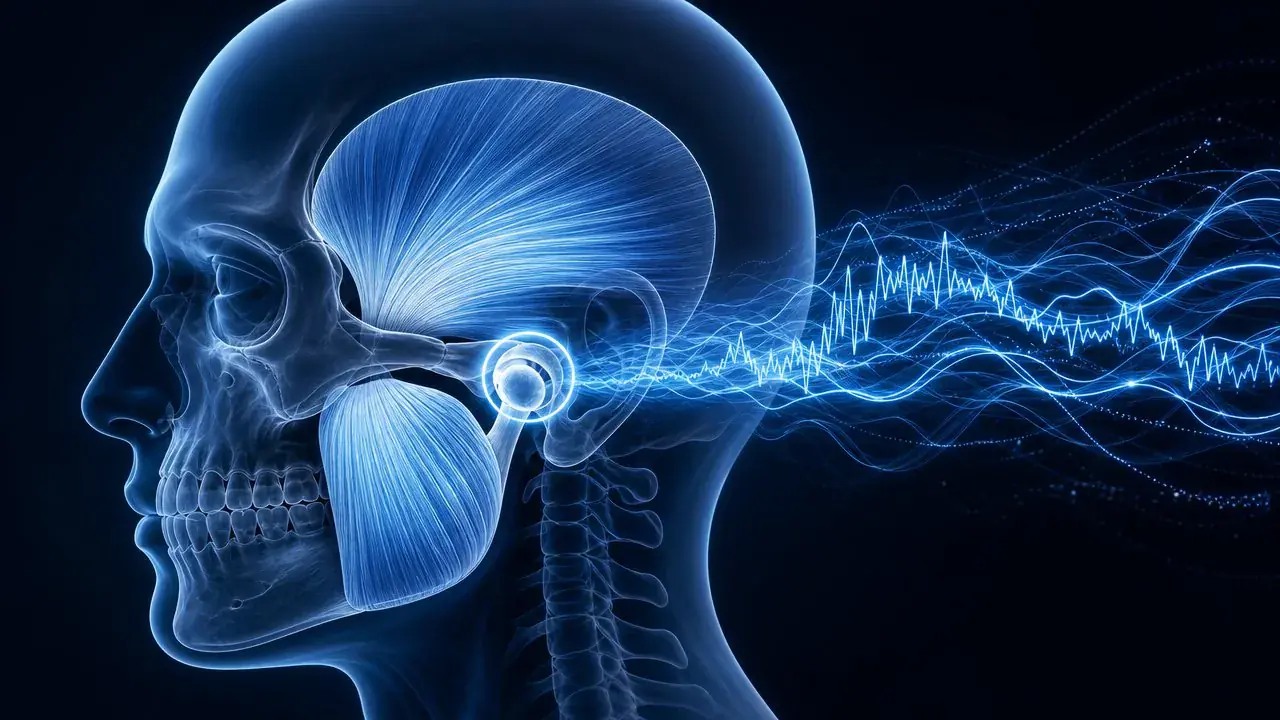
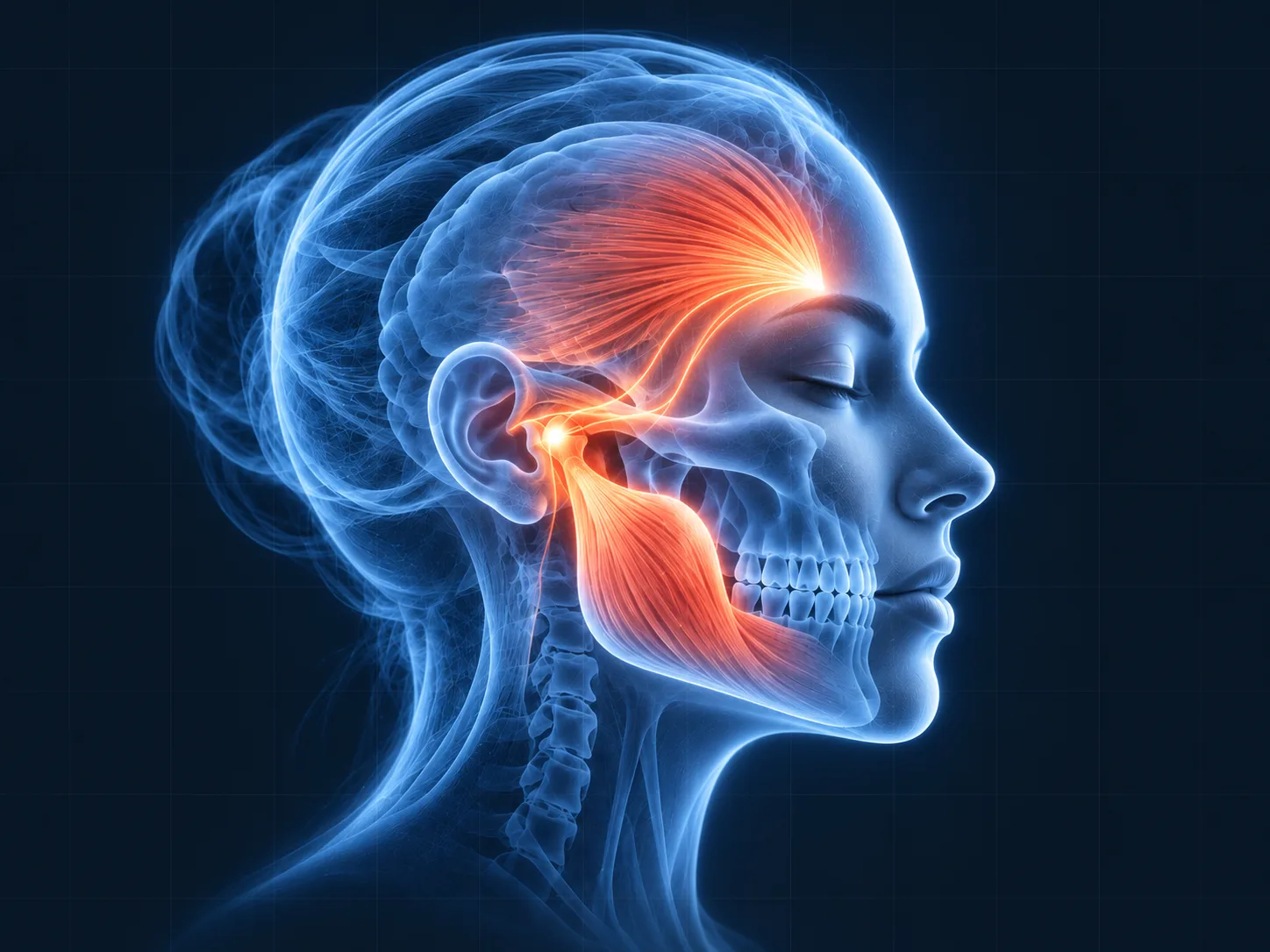
Headaches and facial tension
Most often the jaw muscles, not the joint or the teeth. Overworked muscles are the usual source of the headaches.
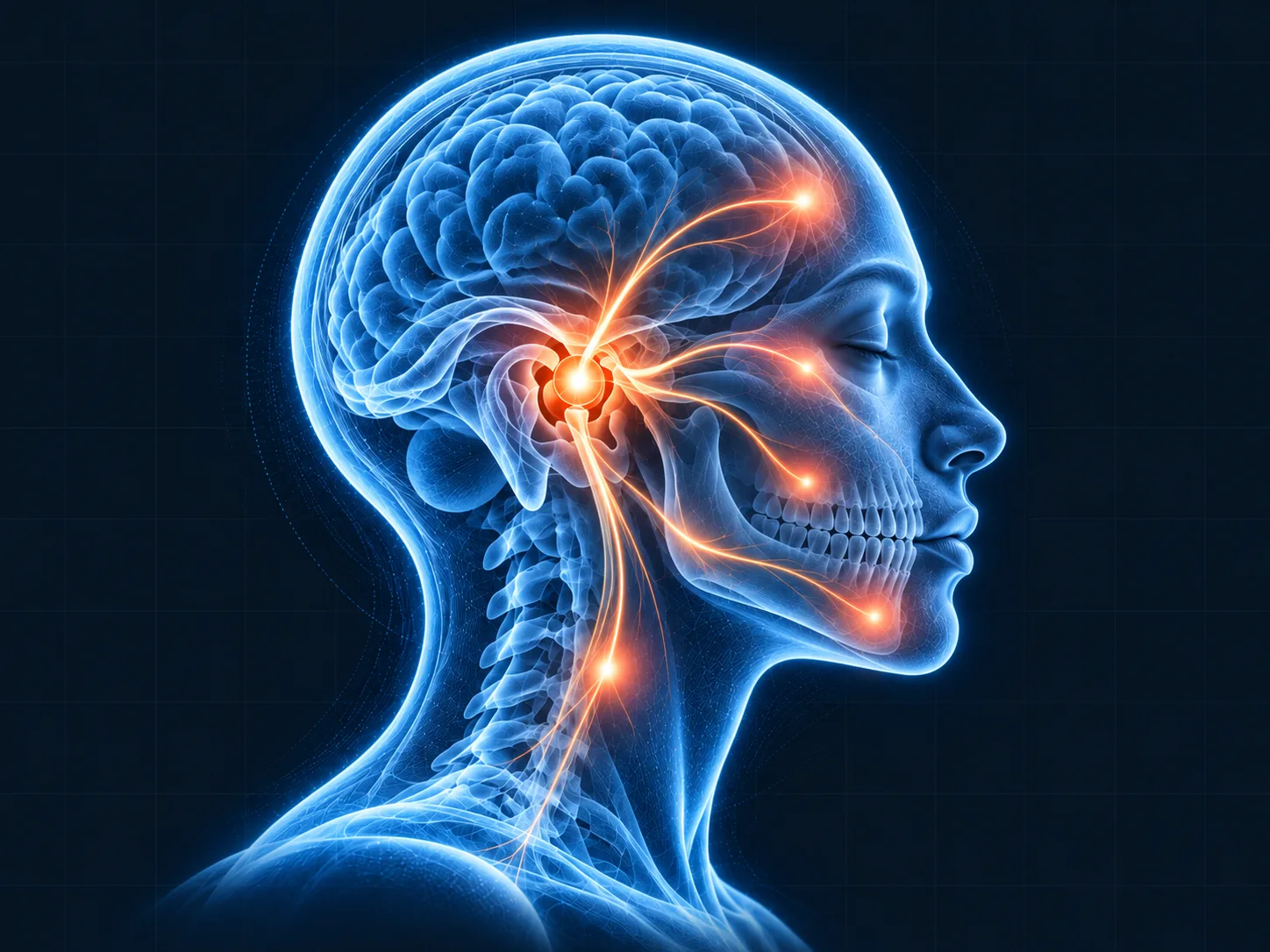
Pain away from the jaw
In most TMJ cases the pain is not felt at the joint itself, but in the head, face or neck around it.
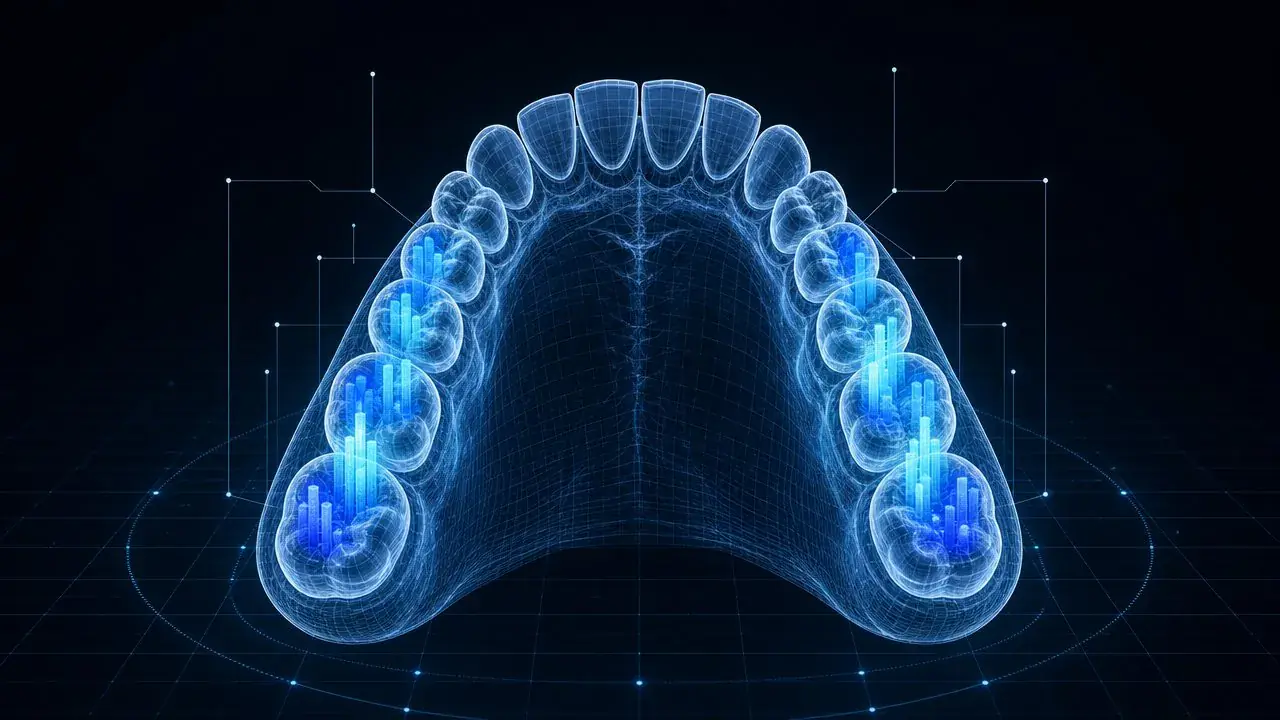
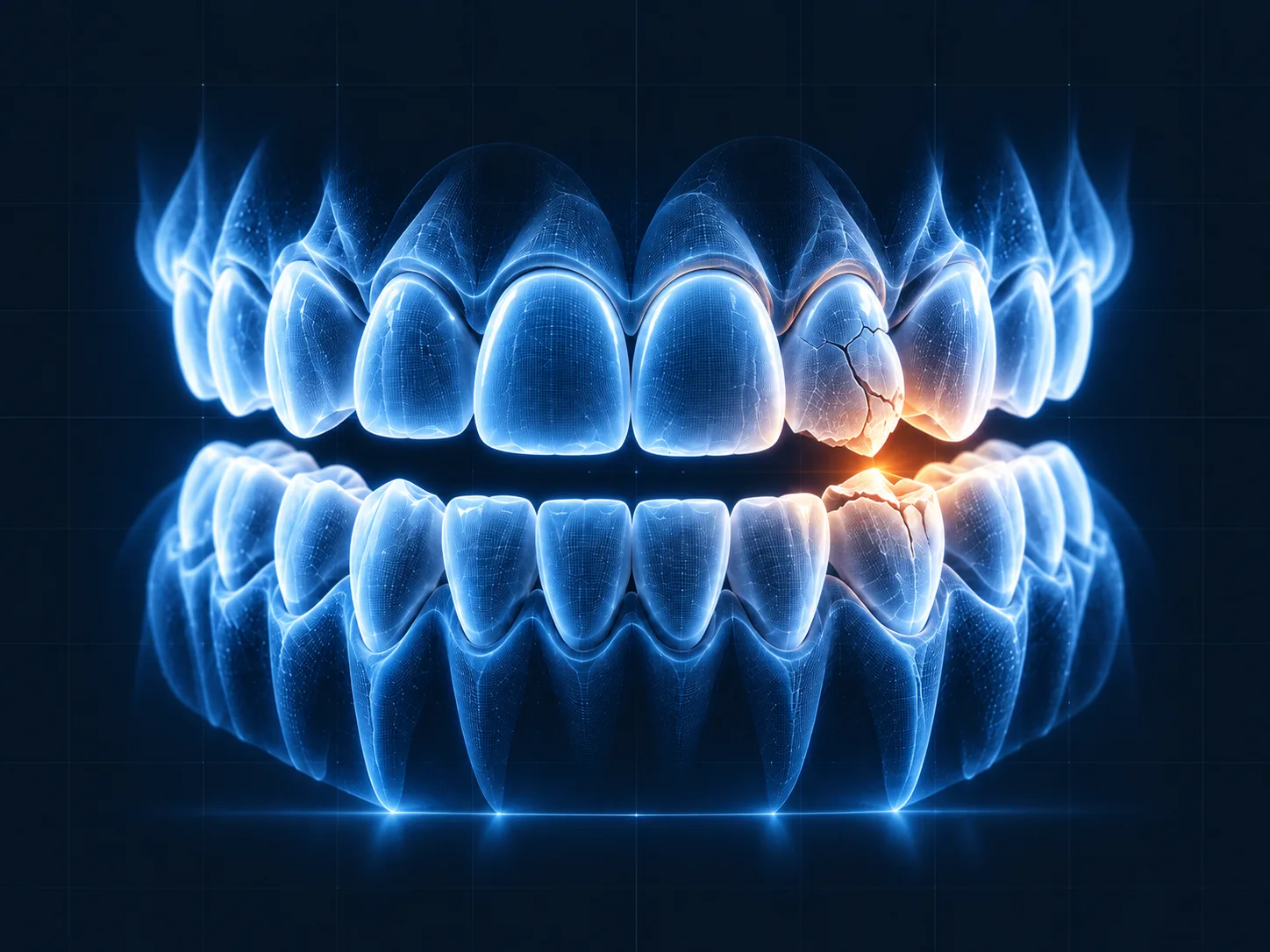
Worn, chipped or broken teeth
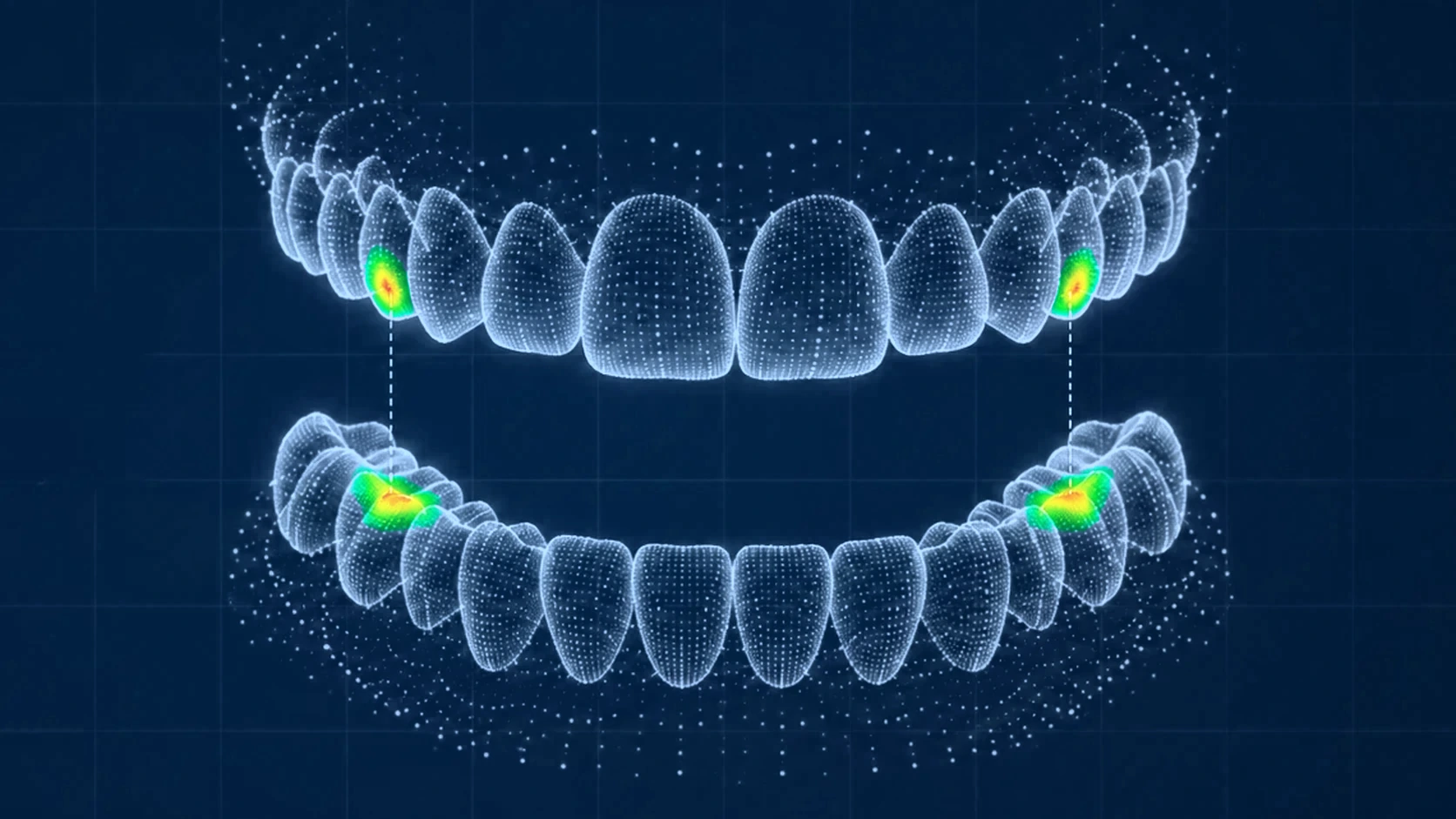
When the teeth meet unevenly, the muscles on the heavier side fire harder, and the teeth take that load first.
Measured, not assumed.Bite × Joint × Muscle
Recognize some of these? Take the 60-second Bite & TMJ quiz
Questions about TMJ.
“I measure before I decide, because a decision made before the measurement is not a diagnosis. It’s a habit wearing a diagnosis’s clothes.”
Dr. Sangiv I. Patel, DDS
What is the difference between TMJ and TMD?
TMJ is the temporomandibular joint itself: the hinge in front of each ear that connects the lower jaw to the skull. TMD (temporomandibular disorder) is the name for problems with that joint and the muscles that move it, though most people say TMJ for both. Dr. Patel describes it as “an orthopedic ailment with a neurological component”: the joint is mechanical, but the muscles and nerves around it decide how it behaves.
What causes TMJ disorder?
Usually several things at once. When the teeth meet unevenly, the muscles on the heavier side fire harder. As Dr. Patel puts it, “the greater the contact, the greater the muscles fire.” Over time that load shows up as worn or broken teeth, strain on the joint, and muscles that never fully rest. Clenching, grinding and past injury add to it.
Why is the pain somewhere other than my jaw?
Because the joint is rarely where TMJ pain is felt. In Dr. Patel’s experience, “almost 90 plus percent of the time” patients feel it elsewhere: headaches, the temples, the face or the neck. The muscles are the power source of the system, and when they are overworked they, more often than the joint or the teeth, are what cause the headaches.
How is TMJ diagnosed at The Smile Galleries?
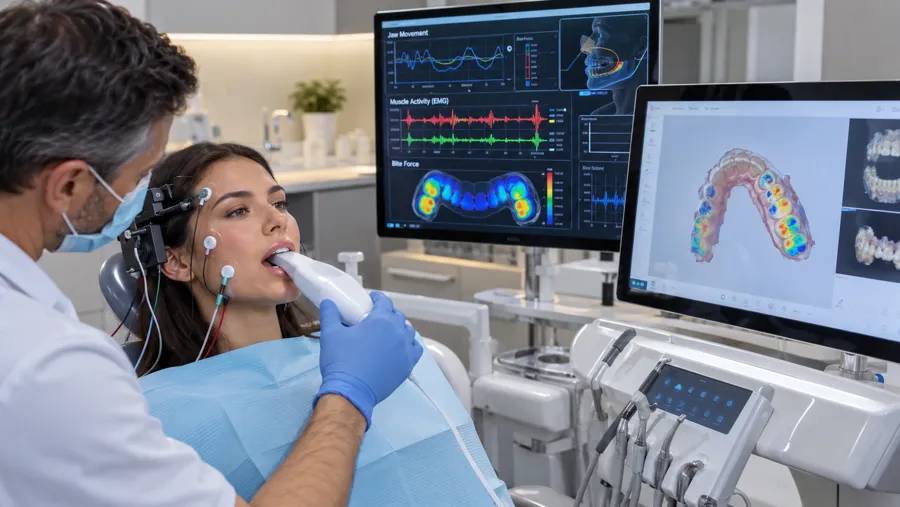
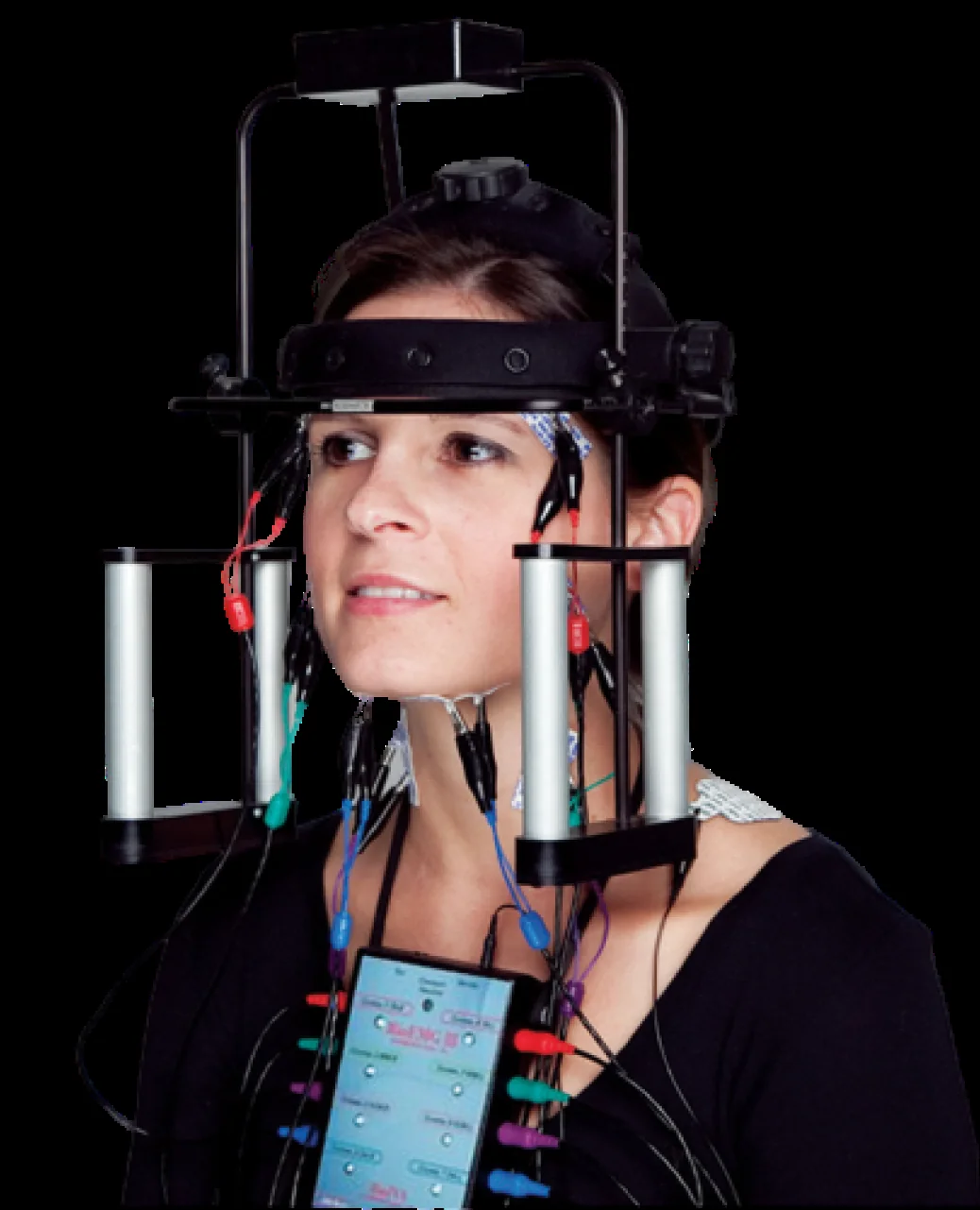
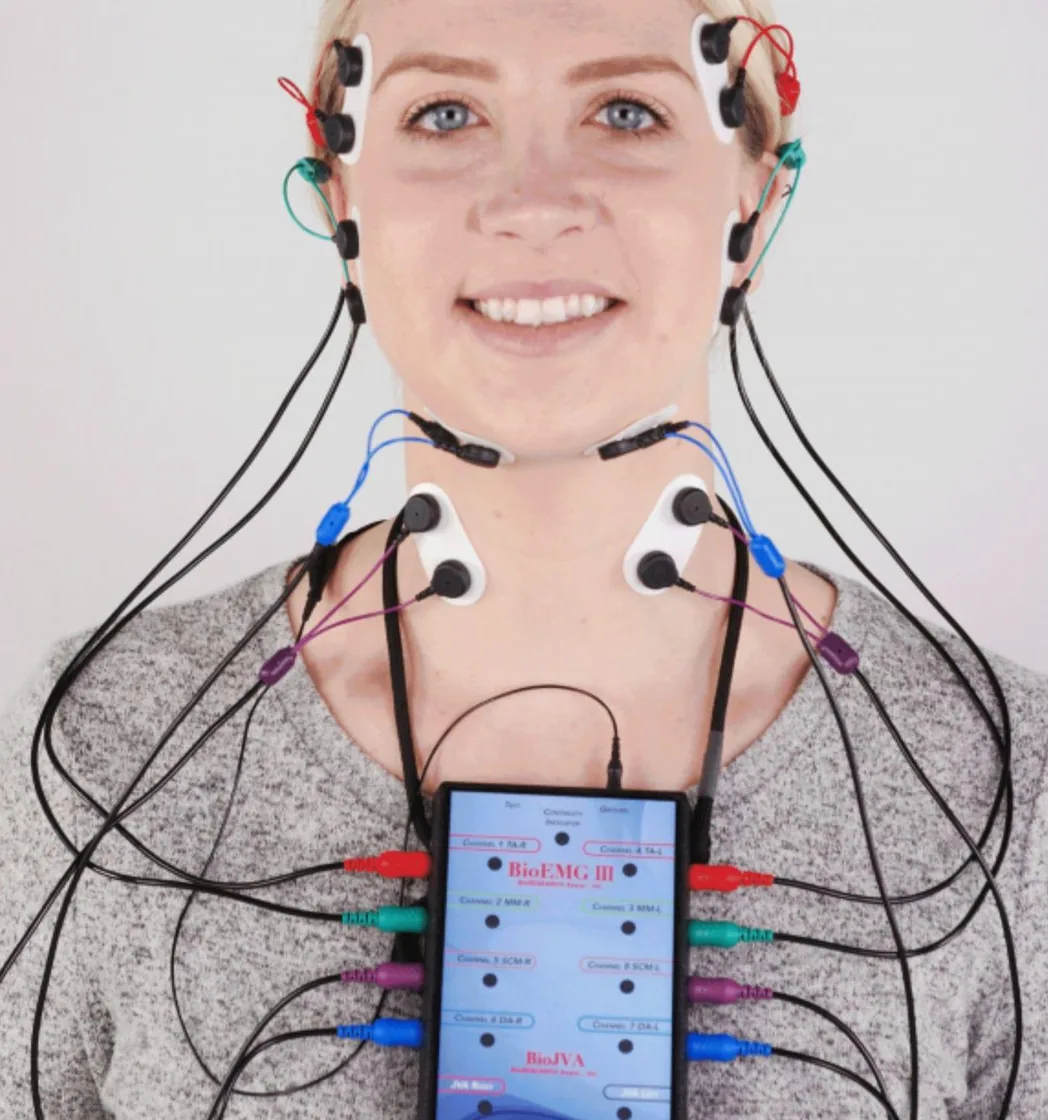
By measurement, the way a cardiologist reads blood pressure with a cuff rather than asking how it feels. T-Scan digital bite analysis maps the timing and force of every tooth contact. BioPAK adds Joint Vibration Analysis (JVA), which uses sensors to record friction inside the joint (healthy joints have none), and electromyography (EMG), which records how hard the jaw muscles fire. X-rays, an intraoral camera and 3D cone beam CT imaging complete the picture. Since 1995 the practice has applied more than 21,000 BioPAK joint and muscle tests and more than 86,000 T-Scan bite analyses.
What does TMJ treatment involve?
Phase one is relief from the headaches, without drugs, while the teeth are protected. That usually means an orthotic engineered to your own test results, shaped so the back teeth cannot overload the joint. As the muscles relax, the jaw settles where it is most comfortable; where that differs from how the teeth meet, the bite is then engineered for long-term stability and the materials are chosen. Progress is measured again with the same instruments. In one patient’s case, EMG recorded a 95 percent drop in jaw-muscle activity after the switch to an engineered orthotic, without drugs.
Will an over-the-counter night guard help?
Not for TMJ. Soft night guards are designed for sports, to protect against quick, sharp blows and broken teeth. Some patients get a few weeks of relief before their headaches return or get worse. An orthotic for TMJ is engineered to the patient’s own measurements, so it changes how the teeth and joint are loaded rather than simply cushioning them.
Does TMJ go away on its own?
The pain sometimes eases, but the cause usually stays. Grinding and clenching are rarely stopped outright; in Dr. Patel’s words, “we mitigate it without drugs.” If pain, clicking or headaches keep returning, or your teeth are visibly wearing, it is worth having the bite, the joint and the muscles measured.
Is this neuromuscular dentistry?
You may see TMJ care described as neuromuscular dentistry. The approach here is physiologic biometric dentistry: care in harmony with each patient’s own physiology, where the joint, the muscles and the bite are measured and treated as one system, and treatment is chosen from what the instruments show.
Does insurance cover TMJ treatment?
Dental insurance usually covers little of it. Annual dental benefits have stayed at roughly $1,000 to $1,500 for decades, while TMJ care is planned around how long the result lasts. The team explains the full cost with you before any treatment begins.
When is jaw pain urgent?
Call 911 if jaw pain comes with chest pain, shortness of breath or sweating. See a physician promptly for a jaw that is locked open or shut, swelling with fever, numbness in the face, or pain after a blow to the face.
Told it’s stress, or that nothing’s wrong? Bring it in.
We’ll show you what we measure.