What a T-Scan Actually Sees
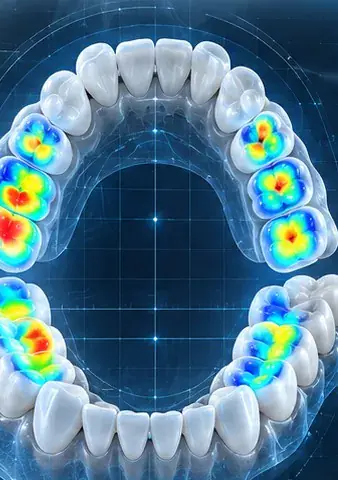
What an instrument sees that a feeling can’t: which teeth meet first, in what order, and how hard.

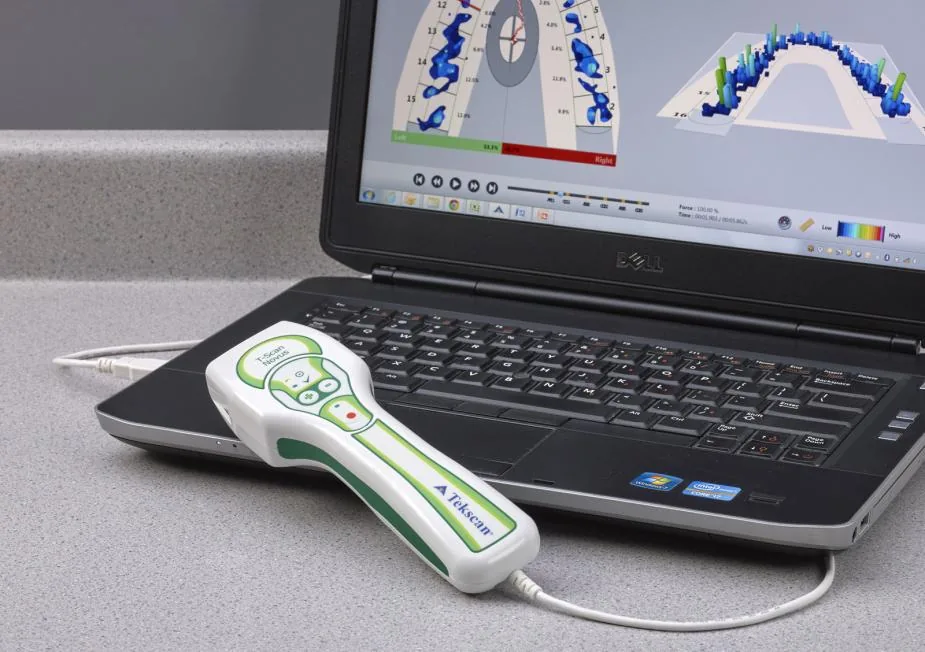
T-Scan Novus at The Smile Galleries, Melbourne, Florida.Fig. 01
It feels fine, until it doesn’t
Ask most people how their bite feels and they’ll shrug. It feels fine, until one day it doesn’t, and by then a jaw joint somewhere has usually been compensating quietly for years.
01 · The instrumentWhat the scan records
A T-Scan doesn’t ask how a bite feels. It records exactly where pressure lands as the teeth close, and exactly when, down to the millisecond.
Two teeth that look like they meet at the same time on a chart can be off by enough to matter, and a patient would never feel that difference directly. The scan does.
02 · The principleWhy we measure first
A difference no one can feel is still a difference the jaw has to live with. Seeing it before anything is changed is the entire point of measuring before deciding anything.
“A feeling is a starting point for a conversation. A reading is something a treatment plan can actually be built on.”
- Reports comfort, not contact
- Can’t tell order or timing
- Adapts as the joint compensates
- Every contact, located
- Timed to the millisecond
- Balance, side to side
03 · What comes nextAbout this series
This is the first article in an ongoing series translating what the practice’s instruments actually reveal, one scan, one measurement, one plain-language explanation at a time.
- T-Scan: bite timingYou’re reading
- CBCT: bone in 3DRead
- JVA: joint soundSoon
- EMG: muscle effortSoon
- CEREC: fitSoon
- Waterlase: tissueRead
- Implants: bone firstRead
Words in this reading
Occlusion
How the upper and lower teeth come together when the mouth closes, in other words, your bite.
Contact timing
The order in which individual teeth touch as the jaw closes, measured in milliseconds from the very first contact.
Force distribution
How the load of a bite is shared across the teeth, and between the left and right sides.
Compensation
When the jaw joint and muscles quietly adjust to work around an uneven bite, often for years before anything is felt.
Curious what your own bite would show?
A T-Scan is part of the first diagnostic visit at The Smile Galleries in Melbourne, Florida.
Dr. Sangiv I. Patel
Dr. Patel founded The Smile Galleries in Melbourne, Florida in 1995. Thirty years of Physiologic Dentistry: bite, joint, muscle and bone measured as one system before any treatment plan is written.
More about Dr. PatelNew readings, by email
Get the next reading when it’s published.
One plain-language article at a time, by email. No promotions, no schedule to keep up with.